Digital Embellishment: Why Finishing Is Above All a Team Effort
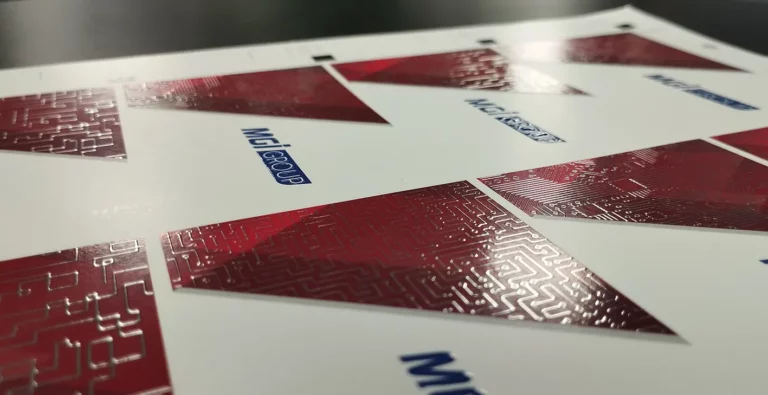
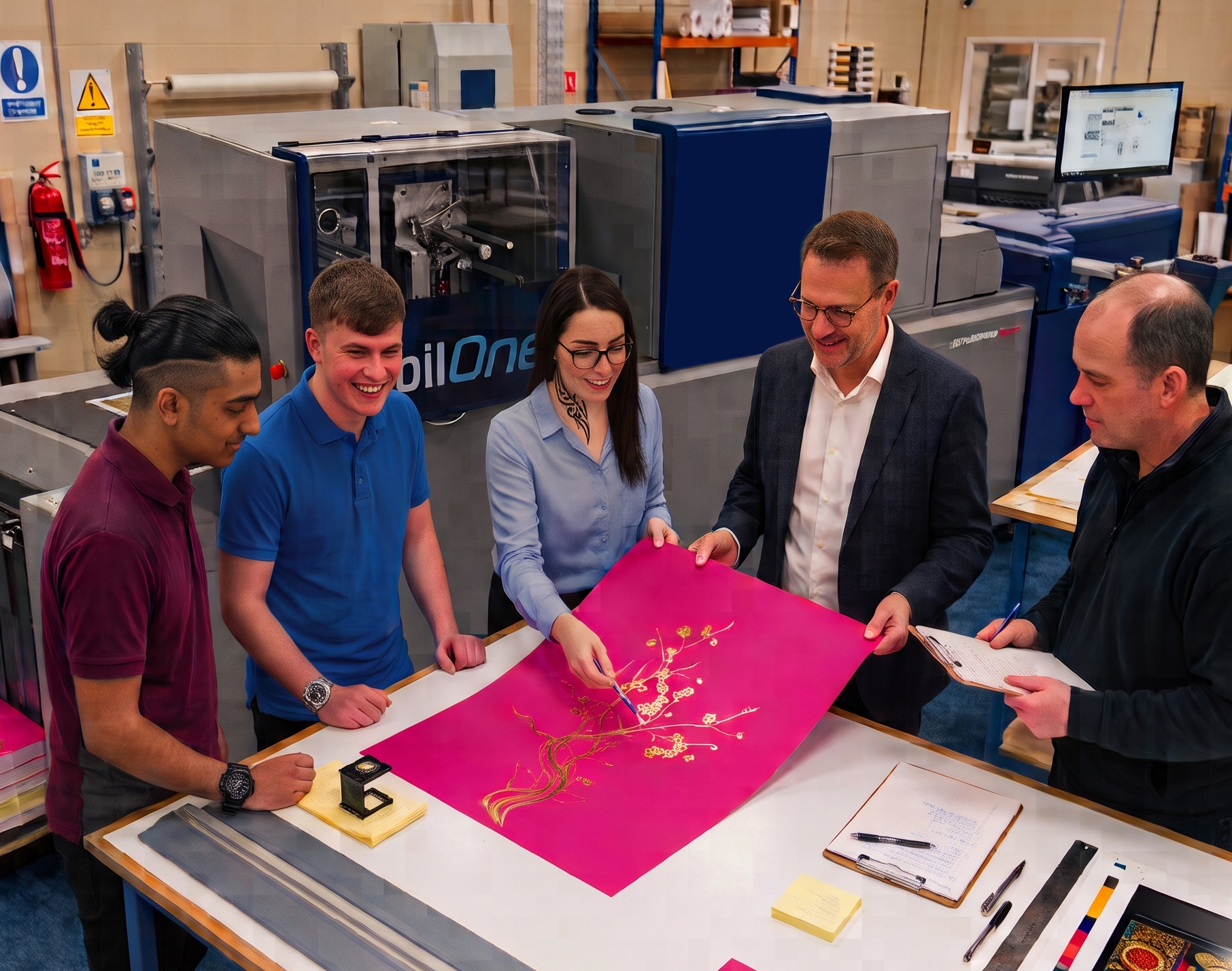
When a sheet emerges from an MGI JETvarnish digital embellishment press or a Konica Minolta AccurioShine, the result almost speaks for itself. Spot varnish catches the light, relief appears under your fingertips, and foil embellishment instantly transforms the perception of the product. But behind this apparent simplicity lies a less spectacular yet essential reality: succeeding in digital embellishment requires getting the entire company to work together.
This is likely one of the most interesting key takeaways from the latest operator meeting held via JETforce, MGI Digital Technology’s social network.
In a traditionally organized print shop, everyone knows their territory. The sales representative sells the job. The prepress department prepares the file. The estimating department calculates the price. The shop floor handles production. This organization can work perfectly for well-controlled, repetitive jobs.
With digital embellishment, the boundaries become much less clear.
The choice of paper, the nature of an ink, a solid area, the fineness of a font, the type of metallic foil, or even the number of planned passes can alter the final result, the production time, and ultimately, the job's profitability.
In other words, a good idea sold to the client must also be a good idea to produce.
The Operator Must Step In Long Before Production
One of the first evolutions therefore consists of bringing the operator into the graphic chain much earlier.
Their experience is hard to replace because embellishment is tactile. A screen can give an excellent idea of a graphic layout, but it will never fully replicate how light catches 3D varnish or foiling, nor how a very fine detail will react once embellished.
The operator understands these limits because they encounter them daily.
They know that a particularly fine font may require special attention. They can estimate the time needed for a job involving multiple passes. They understand how certain synthetic substrates behave, particularly PET. They also know what is actually available on the shop floor: foil colors currently in stock, consumables that need ordering, or varnishes whose shelf life must be monitored.
Involving them in the project before the job reaches the machine helps avoid a lot of unpleasant surprises.
Giving Sales Representatives Something to Show… and to Touch
Digital embellishment has a wonderful quality for sales representatives: it sells through the eyes, but also through the hands.
A photograph can show foil embellishment, but it is far less effective at conveying the tactile feel of raised varnish.
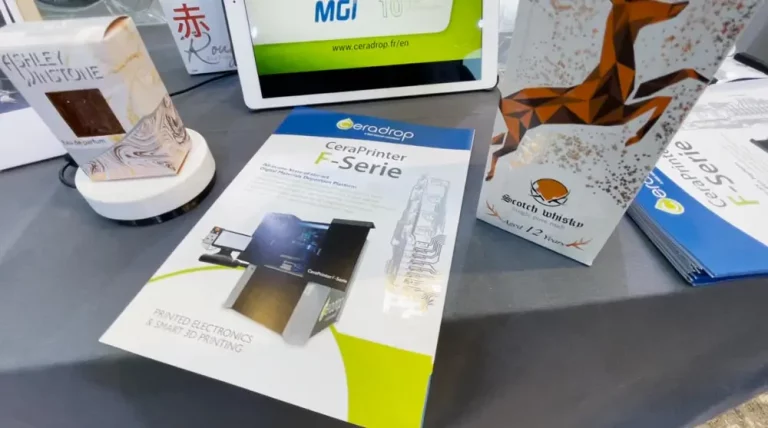
Hence the value of building a genuine material library within the company. Every particularly successful job deserves having a few copies kept: sleeves, cards, covers, labels, packaging…
These achievements gradually become the company’s best sales tools. When a document contains confidential information, simply removing or trimming the affected area is often enough to keep only the relevant side.
Live demonstrations are even more effective.
A few specifically prepared and easily identifiable files—for instance, in a A_DEMO folder—along with a stock of pre-printed sheets make it easy to run a quick demo whenever a client visits the shop floor. A_DEMO – ainsi qu’un stock de feuilles préimprimées permettent de lancer rapidement une démonstration lorsqu’un client visite l’atelier.
Watching a sheet enter the machine and emerge moments later with its varnish or foil remains hard to replace with a sales pitch.
Dialogue between production and sales also helps guide clients intelligently toward foils currently in stock. This avoids promising a reference that requires complex sourcing for just a few dozen sheets. Additionally, certain specialty foils nearing the end of their shelf life can even become an opportunity for a dedicated commercial offer.
Feeding the Result Back to the Studio
Collaboration must work both ways.
Prepress sends the file to the shop floor. But why shouldn't the final result travel back up to prepress?
A photograph or, better yet, a short video showing the product from different angles allows the graphic designer to see what their work actually became.
This is especially useful when creative teams work remotely and do not routinely hold the finished products in their hands.
Watching light move over raised areas, seeing how a foiled region interacts with the print, or understanding why a detail works less effectively than expected helps designers build better files over time.
This feedback loop improves the skills of the entire team.
t should be accompanied by simple, shared rules: registration marks, separations, file resolution, and how to construct areas to be embellished. A few standards understood by everyone prevent many urgent last-minute fixes at the machine.
Estimating Must Also Understand What Happens in Production
A stunning job can turn into a very bad deal if it was misquoted.
Here again, communication with the shop floor is essential.
What will the varnish coverage rate be? How long will the machine be tied up? Does the job require multiple passes? Does the substrate present any specific challenges?
The estimator cannot always deduce these details from a simple file or a commercial description.
On unusual jobs, a few minutes of discussion with the operator before submitting the quote can prevent hours of unbilled production.
The same logic applies to procurement. Actual foil delivery lead times, available references, and consumable expiration dates must be known. A great order quickly loses its appeal if the machine remains idle waiting for the right roll.
A Few Shop-Floor Details Can Yield Big Savings
Profitability often comes down to much more concrete elements.
Foil is a prime example. Consistently using a roll much wider than the area actually embellished amounts to throwing away part of the consumable with every pass.
Equipment that allows rolls to be slitted to the exact width needed can quickly pay for itself.
However, this process requires expertise. Roll winding tension must be carefully controlled. A foil wound too tightly can retain heat during slitting, risking partial melting of the release layer and subsequent wrinkling when fed through the machine.
Slitting must also be performed without overheating the blade unnecessarily—for instance, by using short, successive strokes—along with regular blade replacement.
These are small actions. Yet, multiplied across hundreds of production runs, they directly impact costs.
The Best Machine Cannot Work Alone
Ultimately, improving workflow around a JETvarnish or an AccurioShine does not mean adding procedures and meetings.
In fact, it is quite the opposite.
A ten-minute weekly check-in between production, prepress, and sales can be enough. A few regularly updated samples in the meeting room keep the sales team curious. Photos sent to the studio help designers grow. And consulting the operator before quoting an unusual job prevents discovering complications once production has already started.
Digital embellishment relies on sophisticated technology. But in the end, its profitability depends on something very simple: keeping information flowing between those who design the product, those who sell it, those who quote it, and those who produce it.
Because when it comes to digital finishing, performance is never just about the machine.
It belongs to the whole team.